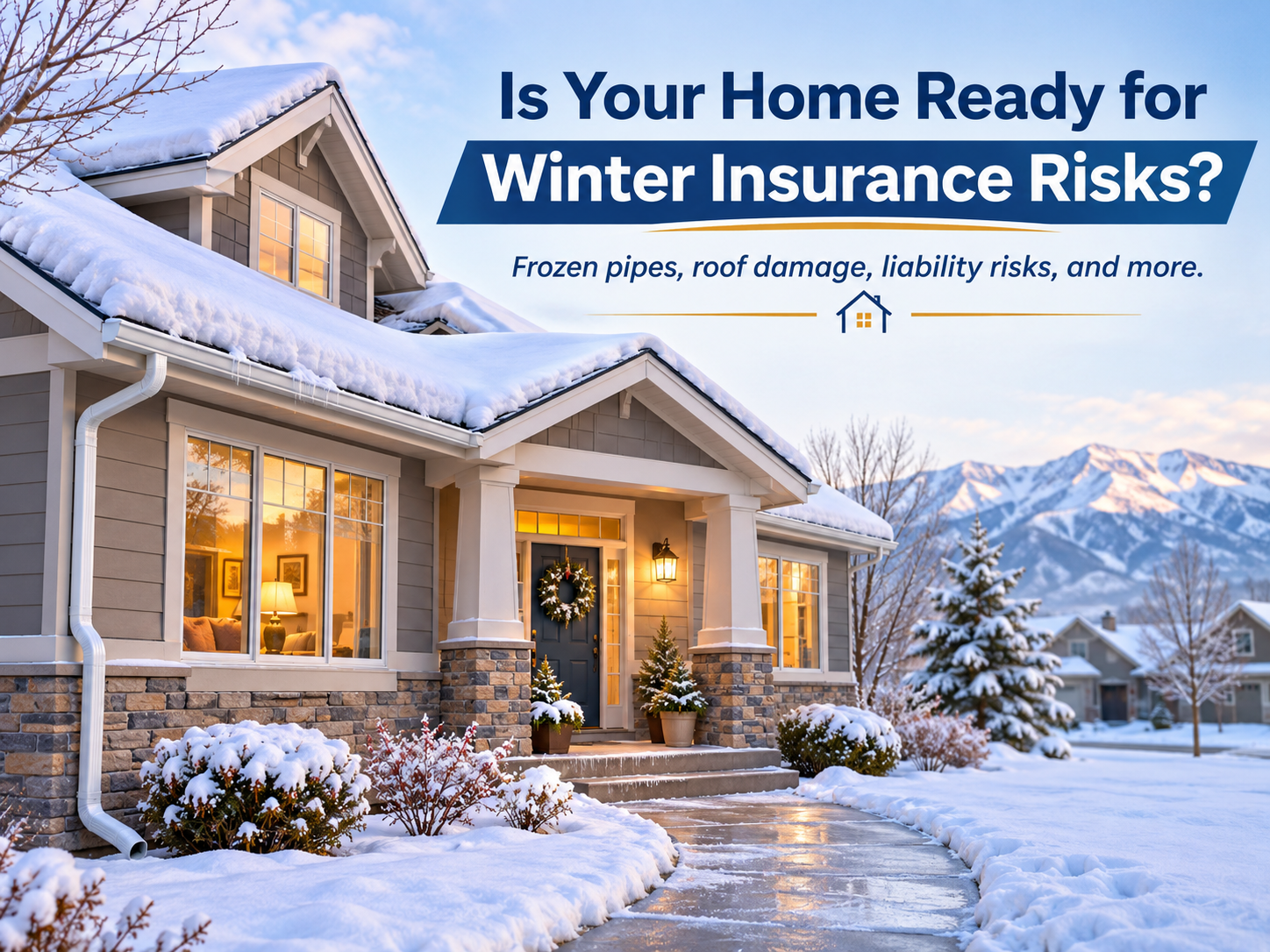
Winter in Utah can bring freezing temperatures, heavy snow, ice, and sudden storms.
Those conditions can also bring expensive homeowners insurance claims.
A frozen pipe can flood a basement. Heavy snow and ice can damage a roof. An icy walkway can lead to someone getting hurt on your property.
Before winter settles in, it is worth asking:
Is your home—and your homeowners insurance—ready?
Imagine Leaving Town for a Winter Weekend
You leave home Friday afternoon for a weekend trip.
While you are gone, temperatures drop dramatically.
A pipe in an exterior wall freezes and bursts.
By the time you return Sunday night, water has damaged the flooring, drywall, cabinets, and furniture.
Homeowners insurance often covers sudden and accidental water damage from a burst frozen pipe, but insurers generally expect homeowners to take reasonable precautions to prevent freezing.
If the heat was shut off or the home was left without reasonable precautions, coverage could be affected.
That makes prevention especially important.
Protect Your Pipes Before They Freeze
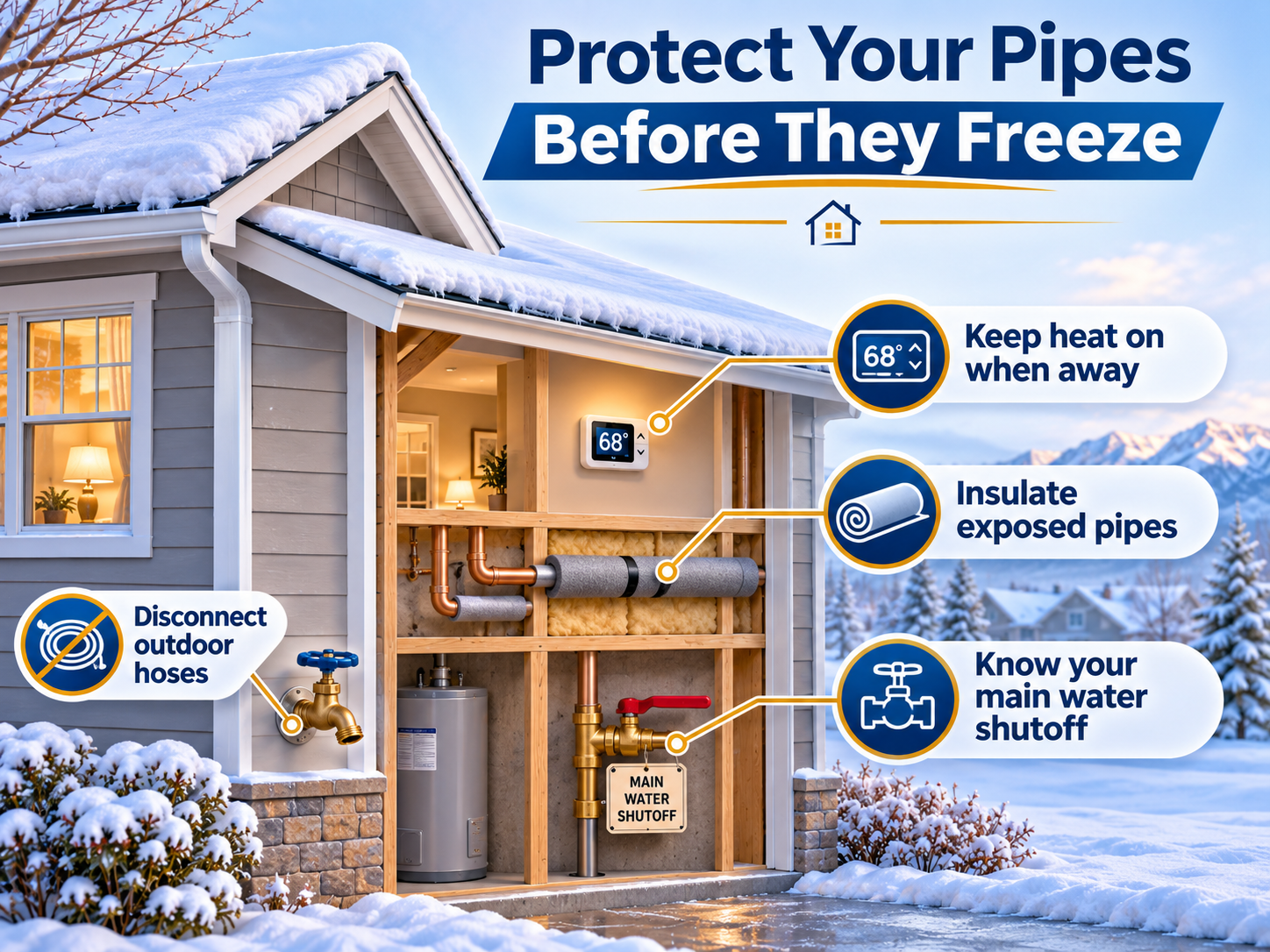
Some of the most expensive winter damage can begin with a small section of frozen plumbing.
Before temperatures drop:
Disconnect outdoor garden hoses
Winterize exterior faucets and irrigation systems
Insulate pipes in crawl spaces, attics, garages, and exterior walls
Seal drafts around doors and windows
Keep your heating system maintained
Know where your home's main water shutoff is located
During extreme cold, opening cabinets under sinks can help warm air circulate around plumbing, and allowing a small amount of water to flow may help protect vulnerable pipes.
If you leave home during winter, do not assume turning the thermostat way down is worth the savings.
A flooded house can cost far more than a few days of heating.
Watch Your Roof This Winter
Snow looks great on Utah mountains.
It is less appealing when too much of it is sitting on your roof.
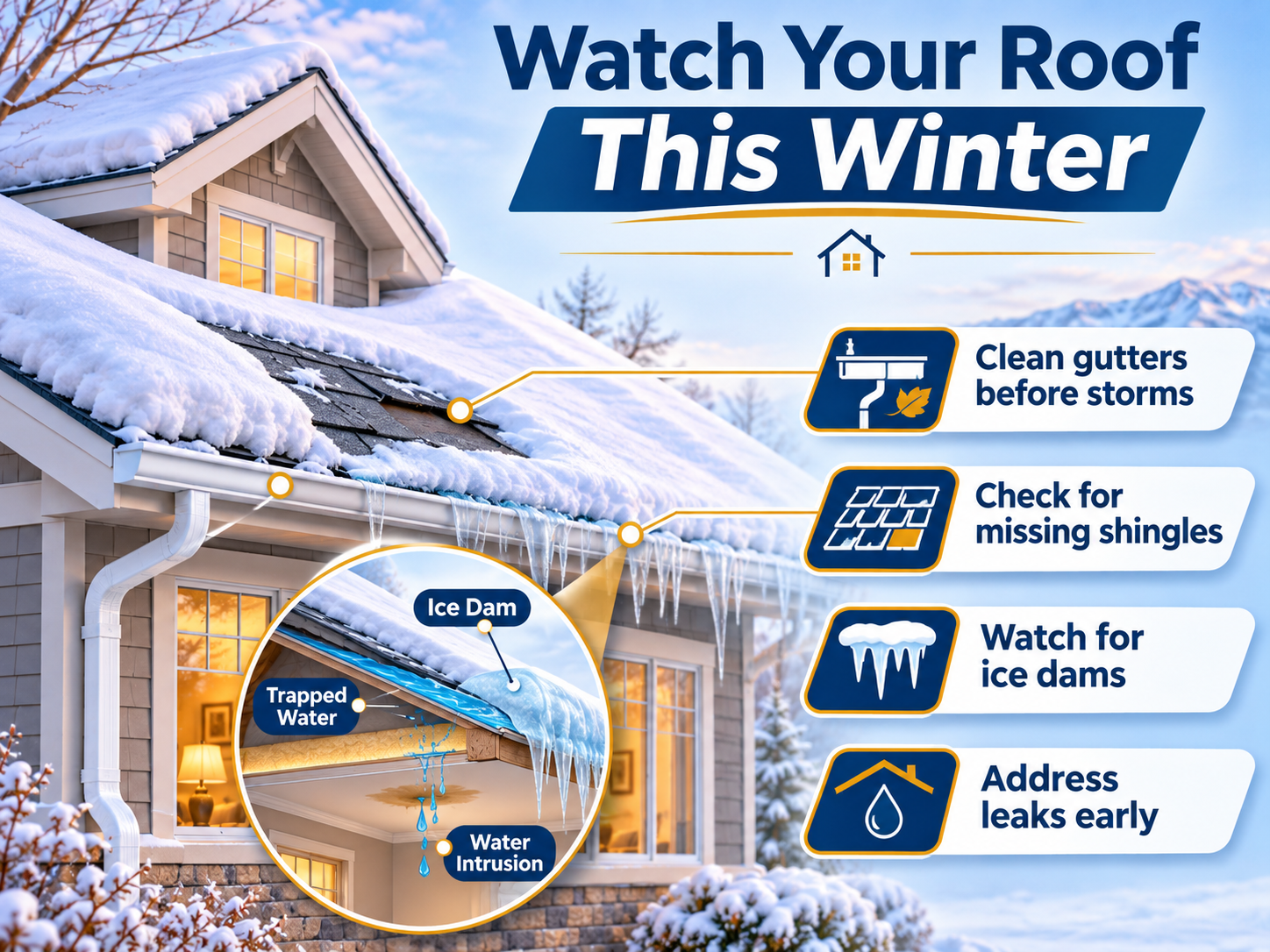
Heavy snow and ice can put additional stress on a home's structure. Ice dams can also form near the edge of a roof, preventing melting snow from draining properly and potentially allowing water to work its way underneath shingles.
Before winter:
Clean leaves and debris from gutters
Make sure downspouts drain properly
Check for damaged or missing shingles
Address existing roof leaks
Have older or questionable roofs inspected
Your homeowners policy may cover certain sudden winter-storm damage, subject to the policy and deductible.
But insurance is not designed to replace normal maintenance or deterioration.
Keep Walkways Safe
Winter risk is not only about damage to the house.
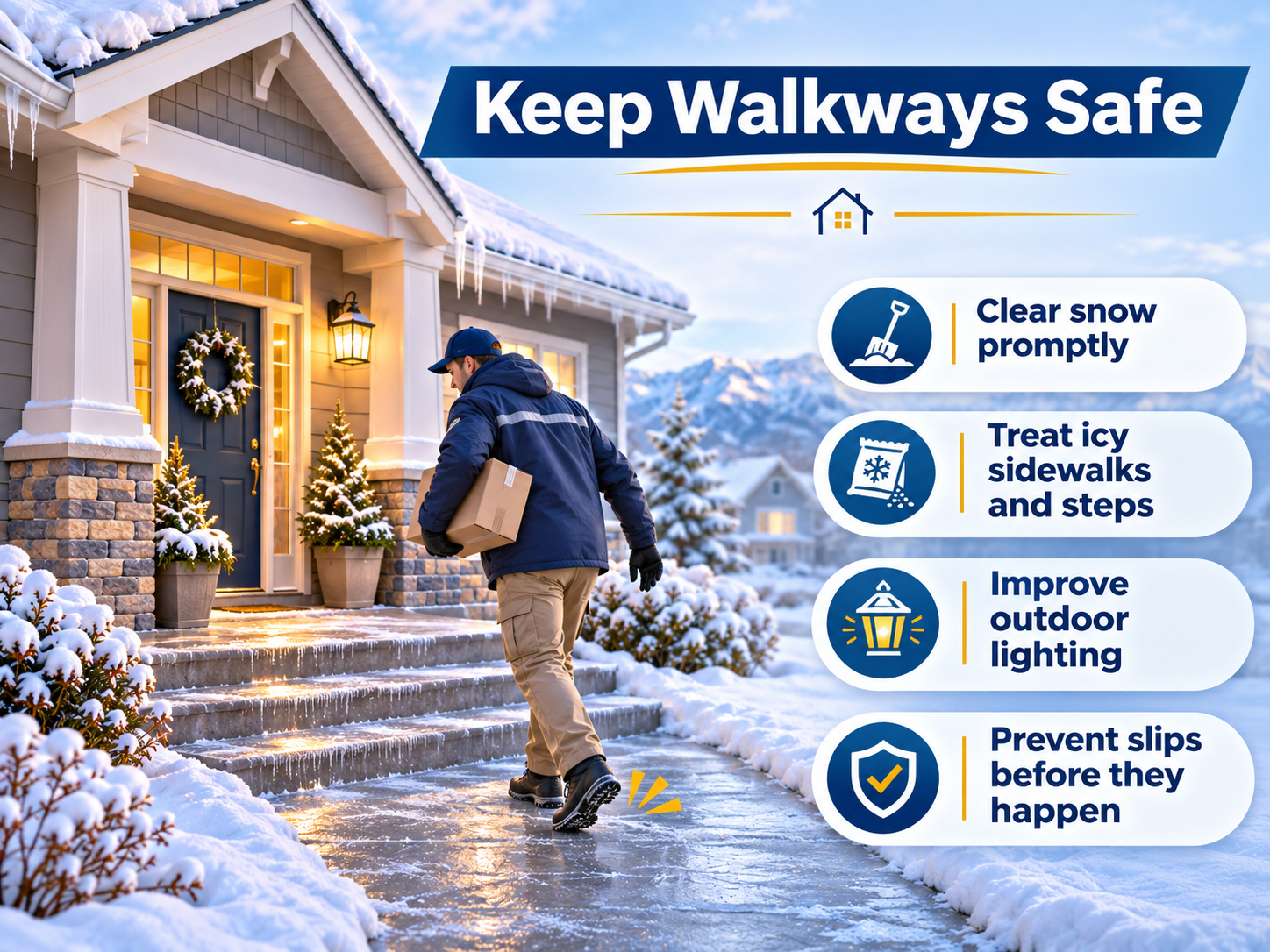
Imagine a delivery driver walking toward your front door after an overnight snowstorm.
They step onto an icy walkway, fall, and suffer a serious injury.
Homeowners insurance generally includes liability protection that may respond when someone outside your household is injured on your property, depending on the circumstances and policy.
That does not mean homeowners should simply rely on insurance.
Clear snow promptly and treat icy:
Sidewalks
Driveways
Steps
Porches
Walkways
Preventing the accident is always better than dealing with the claim afterward.
Heating Your Home Creates Another Winter Risk
Furnaces, fireplaces, wood-burning stoves, and space heaters all get more use as temperatures fall.
That makes fall a good time to:
Service your furnace
Replace HVAC filters
Inspect and clean fireplaces or chimneys when appropriate
Test smoke detectors
Test carbon monoxide detectors
Keep portable heaters away from furniture, curtains, bedding, and other combustible materials
Homeowners policies generally provide protection for covered fire losses, but proper maintenance can help prevent the loss from happening in the first place.
What About Snowmelt or Flooding?
This is an important distinction.
Water coming from a burst interior pipe can be treated very differently from water entering your home from outside.
Flooding and surface water are generally not covered by standard homeowners insurance.
Melting snow can contribute to flooding, particularly when the ground is frozen or drainage systems cannot handle the water.
If your property may have flood exposure, separate flood insurance may be worth discussing.
A Quick Winter Home Checklist
Before the coldest part of winter arrives, check:
Pipes are insulated where needed
Outdoor plumbing is winterized
Furnace is working properly
Smoke and carbon monoxide detectors work
Gutters are clean
Roof is in good condition
Snow-removal supplies are ready
You know where the main water shutoff is
Your homeowners insurance limits and deductibles are understood
You know whether you have water backup and other optional coverages
A few hours of preparation now could prevent a much larger problem later.
Know What Your Policy Covers Before Winter Tests It
Homeowners insurance can protect you from many unexpected losses.
But it does not replace good maintenance, and not every type of winter-related water or property damage is covered the same way.
At Tommy Thomsen Insurance, we can review your homeowners policy and help you understand how it may respond to frozen pipes, winter storms, liability claims, water damage, and other common risks.
Let’s Get Your Home Ready for Winter

Do not wait until a pipe bursts or water starts coming through the ceiling to find out what your policy covers.
Request a homeowners insurance review through our website or call Tommy Thomsen Insurance at 801-982-7200.
We will explain your coverage in plain language so you can head into winter knowing what protection you have.
This article provides general insurance information and is not a guarantee of coverage. Coverage for frozen pipes, water damage, roof damage, liability, fire, flooding, deductibles, limits, exclusions, and claim payments varies by insurer, policy, maintenance history, and circumstances of the loss.