What Information Should You Gather After a Car Accident?
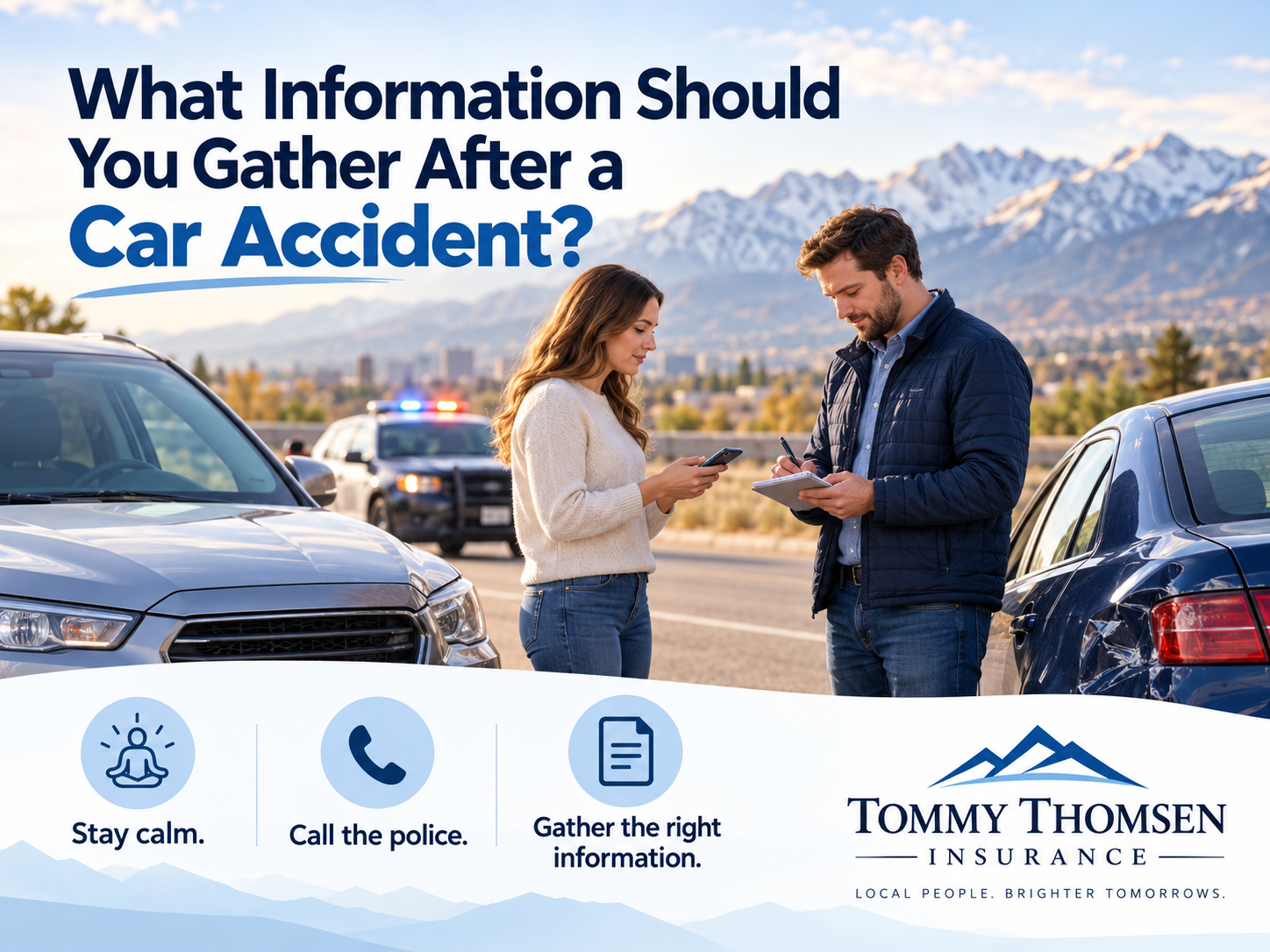
A car accident can happen in seconds.
Even a relatively minor accident can leave you shaken, distracted, and trying to remember what you are supposed to do next.
Our first recommendation is simple:
Call the police.
Even when an accident appears minor, having law enforcement respond can help document what happened and create an official record of the accident.
The Utah Insurance Department also recommends calling the police after an accident.
But what happens if an officer does not respond—or the accident is minor and the drivers decide to exchange information themselves?
That is when knowing exactly what information to gather becomes extremely important.
First, Make Sure Everyone Is Safe
Before worrying about insurance information, check yourself, your passengers, and the people in the other vehicle for injuries.
If anyone may be injured, call 911.
Utah law requires drivers involved in an accident resulting in injury or death to notify law enforcement immediately. For a property-damage-only accident, Utah law also requires notification when the apparent damage is $2,500 or more.
The problem is that it can be extremely difficult to estimate vehicle damage on the side of the road.
A bumper that looks slightly damaged may have sensors, cameras, brackets, or other components underneath it that make the repair much more expensive than expected.
That is one reason we recommend calling the police regardless of how minor the accident initially appears.
If there are no injuries and the vehicles can safely be moved, Utah law allows vehicles involved in a property-damage accident to be moved out of traffic to a safe location. Moving the vehicle in this situation does not determine fault.
If Police Do Not Respond, Gather This Information
If Police Do Not Respond, Gather This Information
Do not simply exchange phone numbers and drive away.
Before leaving the scene, gather as much information as possible.
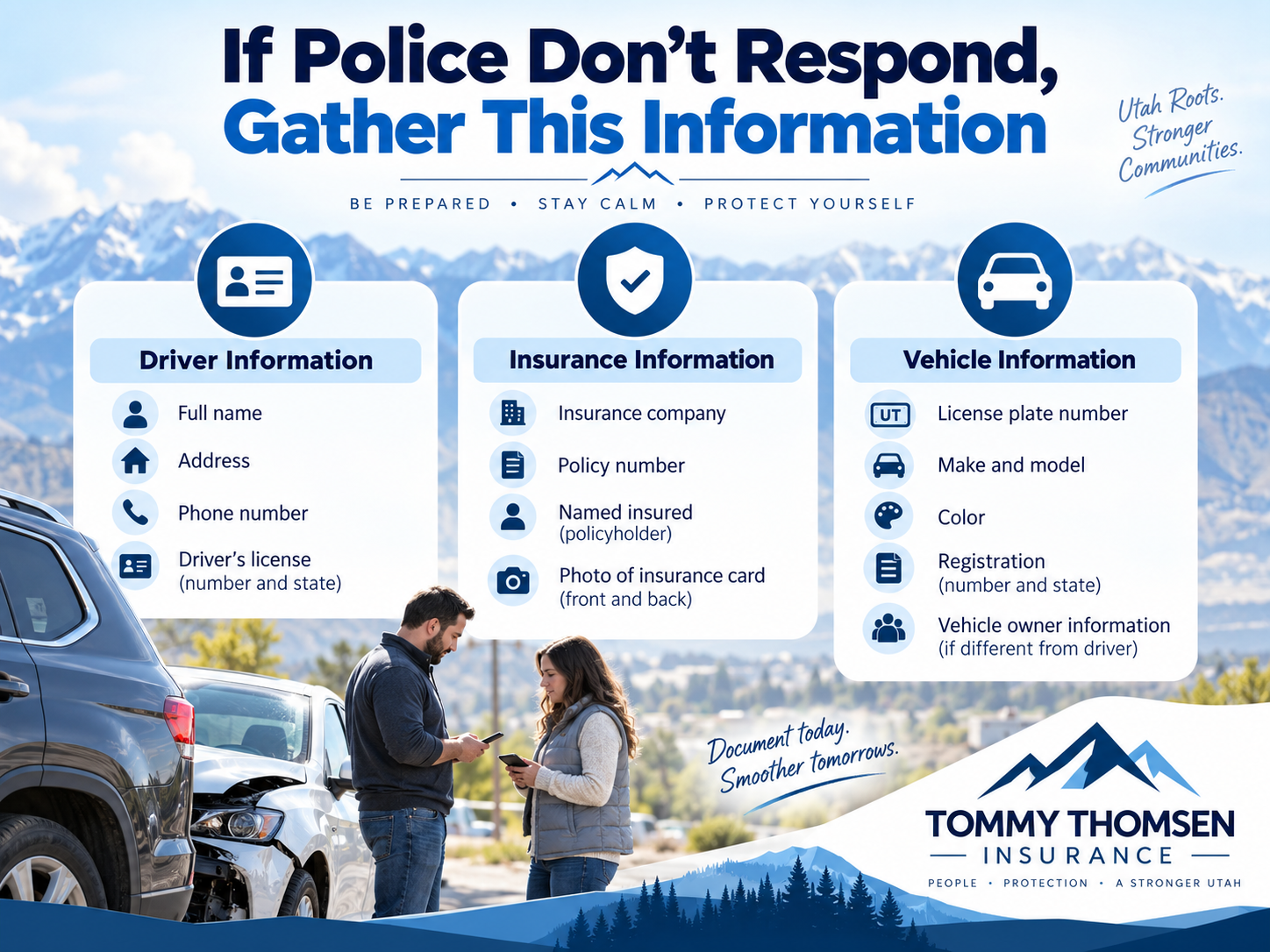
1. Driver Information
Get the other driver's:
Full name
Address
Phone number
Driver's license information
Taking a clear photo of the driver's license can be easier than trying to write everything down.
Utah law requires drivers involved in applicable accidents to exchange their name, address, vehicle registration number, and insurance provider information, and to show a driver's license upon request when available.
2. Insurance Information
Take a photo of the other driver's insurance card and record:
Insurance company
Policy number
Named insured
Insurance company or agent phone number
Make sure the insurance card belongs to the vehicle involved in the accident.
If the driver is not the owner of the vehicle, get the vehicle owner's name and contact information as well.
3. Vehicle Information
Document the other vehicle's:
License plate
Make
Model
Approximate year
Color
Registration information
A quick photo of the license plate and vehicle can save you from trying to remember these details later.
Take More Photos Than You Think You Need
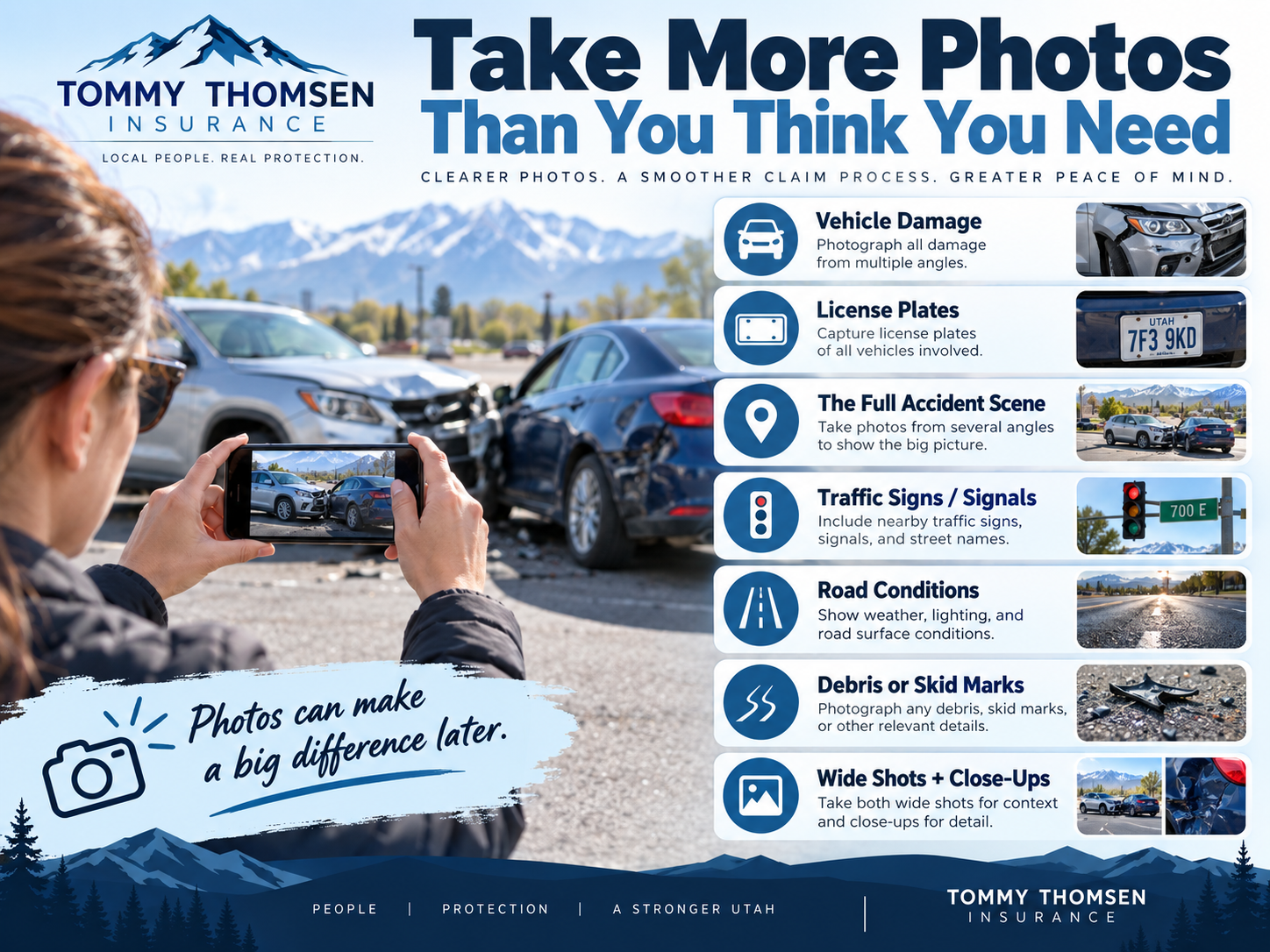
Your phone can be one of the most useful tools you have after an accident.
Take pictures of:
Damage to your vehicle
Damage to the other vehicle
All four sides of both vehicles
License plates
The entire accident scene
The roadway and intersection
Traffic signals and stop signs
Lane markings
Debris on the road
Skid marks, if present
Nearby property that was damaged
Weather and road conditions
If it is safe to do so, take some wider photos showing where the vehicles ended up before they are moved.
Then take close-up photos of the actual damage.
Pictures that seem unnecessary at the time can become extremely useful when the accident is being reconstructed days or weeks later.
Get Witness Information
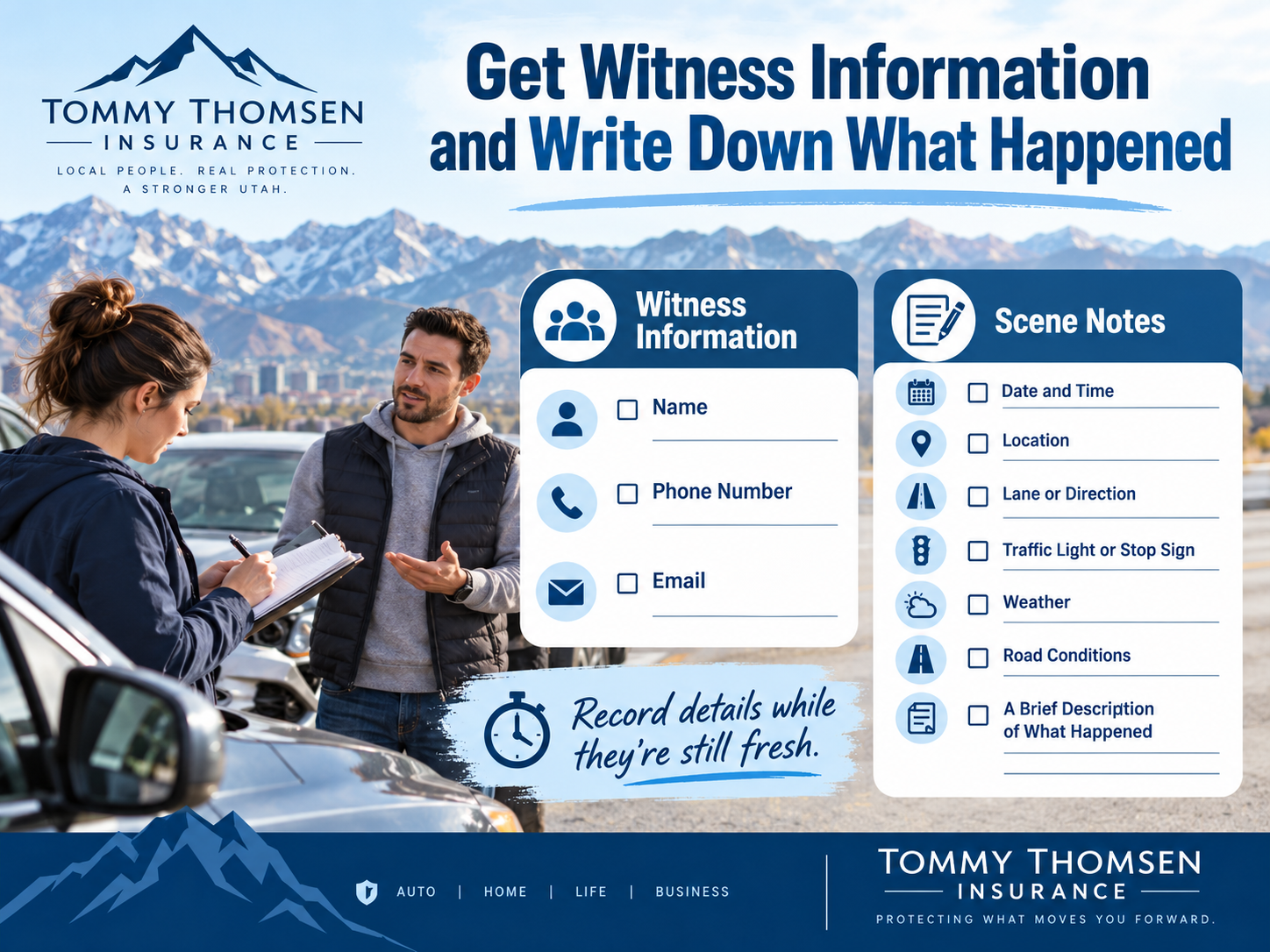
If someone saw the accident, ask for their:
Name
Phone number
Email address
A witness who has no connection to either driver can be especially helpful when the two drivers remember the accident differently.
The Utah Insurance Department specifically recommends obtaining contact information for witnesses after an accident.
Write Down What Happened While It Is Fresh
As soon as you safely can, write down your own description of the accident.
Include:
Date
Time
Exact location
Direction you were traveling
What lane you were in
What happened immediately before the collision
Traffic-light or stop-sign conditions
Weather
Road conditions
Anything unusual you noticed
Do not worry about writing a perfect statement.
The goal is simply to record what you remember before those details start becoming harder to recall.
Stick to the facts rather than arguing with the other driver about who was at fault.
Document Any Injuries
Some injuries are obvious immediately.
Others may become noticeable later.
At the scene, make note of any pain, discomfort, cuts, bruises, dizziness, or other symptoms you or your passengers experience.
If emergency medical personnel respond, keep any paperwork they provide.
Don't Forget Towing and Other Expenses
If your vehicle cannot be driven, record:
Name of the towing company
Phone number
Where the vehicle is being taken
Tow bill
Storage charges
Keep receipts for expenses associated with the accident.
The Utah Insurance Department recommends saving bills and receipts for expenses such as towing, storage, and rental vehicles.
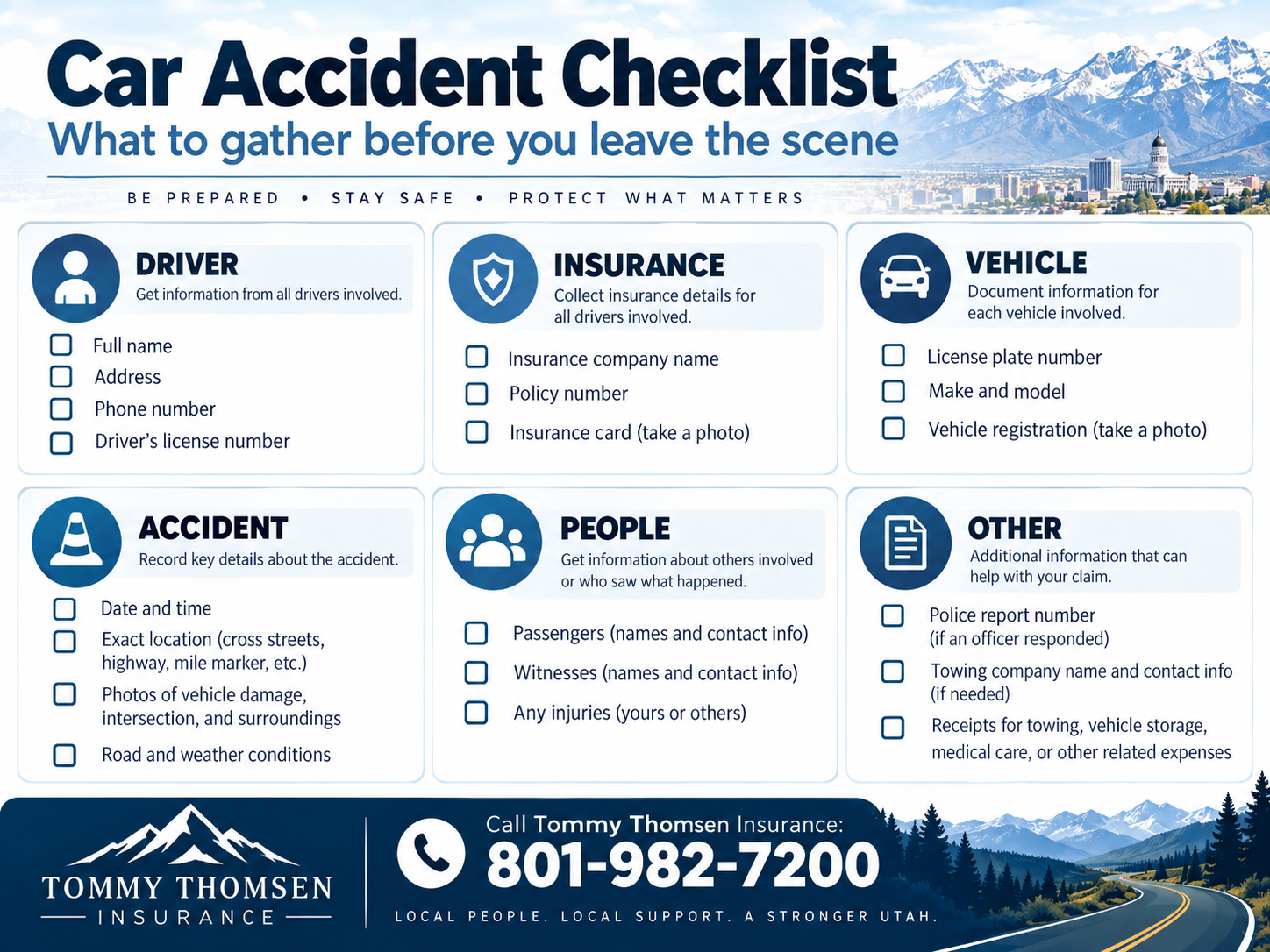
The Accident Checklist
If you remember nothing else, gather these:
Driver
Name
Address
Phone
Driver's license
Insurance
Company
Policy number
Insurance card
Vehicle
License plate
Make and model
Registration
Vehicle owner information
Accident
Date and time
Exact location
Photos and video
Damage
Road and weather conditions
People
Passengers
Witnesses
Injuries
Other
Police report or incident number
Towing information
Receipts
The Utah Insurance Department recommends collecting many of these same details, including names, addresses, telephone and license numbers, witnesses, vehicle information, insurance information, road conditions, apparent damage, injuries, and your description of the accident.
Why Calling the Police Is Still Our Recommendation
You may look at a small accident and think:
“We can just exchange insurance information.”
Sometimes that works.
But situations can change quickly.
The other driver may later remember the accident differently. Damage may turn out to be much more expensive than expected. Someone may later report an injury.
Having law enforcement involved provides another layer of documentation.
Our recommendation: call the police and let them decide whether an officer needs to respond.
Call Your Insurance Agent After the Accident
Once everyone is safe and you have gathered the information you need, contact your insurance agent.
At Tommy Thomsen Insurance, we can help you understand your coverage and what your next steps may be after an accident.
Call Tommy Thomsen Insurance at 801-982-7200.
And before you need this checklist, consider saving this article on your phone. Hopefully you never need it—but if an accident happens, you will be glad you know what information to collect.
This article provides general insurance information and is not legal advice. Accident-reporting requirements, insurance coverage, claims procedures, and individual circumstances vary. In an emergency or whenever someone may be injured, call 911.