Why Waiting to Buy Life Insurance Can Cost You

Life insurance is one of those things that is easy to put off.
“I’m healthy.”
“I’m still young.”
“I’ll take care of it next year.”
The problem is that life insurance is generally easiest to qualify for when you do not feel like you need it yet.
Your age and health can affect both your eligibility and what you pay for coverage. Waiting several years—or waiting until your health changes—can make the same protection more expensive or potentially harder to obtain. The Utah Insurance Department specifically notes that if you are older or your health has changed, premiums for a new policy will often be higher, and someone who is no longer insurable may not be able to purchase a new policy.
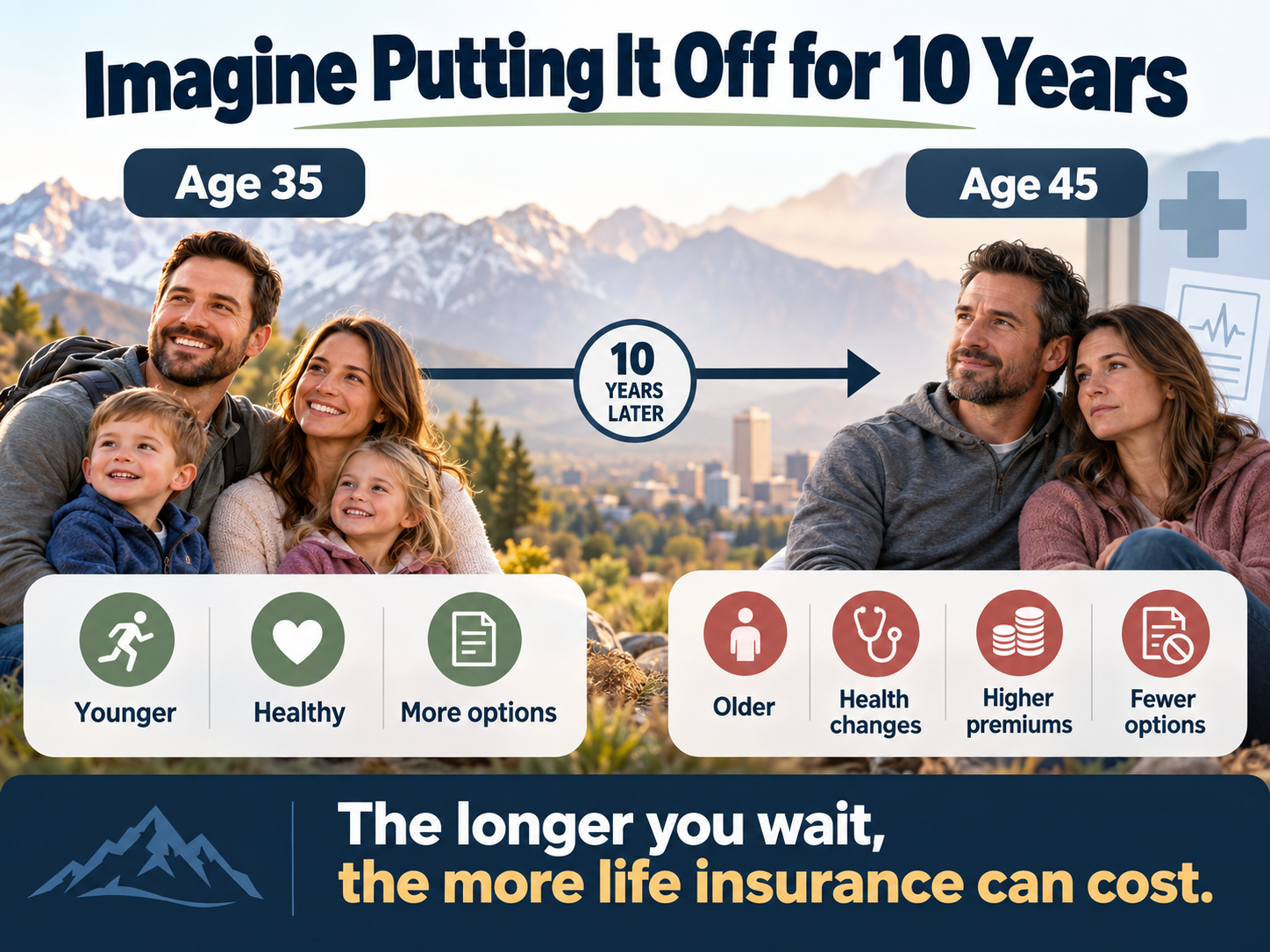
Imagine Putting It Off for 10 Years

Imagine a 35-year-old parent with two young children, a mortgage, and a spouse who depends on their income.
They consider purchasing life insurance but decide:
“I’m healthy. I’ll worry about that later.”
Ten years pass.
At 45, they finally decide it is time to apply.
But a lot can change in ten years.
Maybe they have developed high blood pressure. Maybe their weight or medications have changed. Maybe they have been diagnosed with a more serious medical condition.
Now the insurance company is evaluating a 45-year-old applicant with a different health history instead of the healthy 35-year-old who could have applied a decade earlier.
The result could be a higher premium, different available options, or—in more serious circumstances—difficulty qualifying for new coverage at all.
The family did not need less protection because ten years passed.
They may actually need it more.
Age Matters
Life insurance companies use underwriting to evaluate the risk of insuring an applicant and determine the appropriate premium. Medical information and other factors may be considered during that process.
Age is an important part of that equation.
As you get older, the cost of purchasing new life insurance generally increases.
That means waiting five or ten years does not necessarily save money simply because you avoided paying premiums during that time.
You may eventually be purchasing coverage at an older age and potentially at a higher rate.
Your Health Can Change Faster Than You Expect
Age is predictable.
Someone who is perfectly healthy today could receive an unexpected diagnosis next year.
That does not necessarily mean they cannot purchase life insurance, but changes in health can affect eligibility, available coverage, and premium.
The NAIC specifically advises consumers that health changes can affect both their ability to obtain a new policy and what they will pay for it.
This is one of the biggest reasons to think about life insurance before a major health event happens.
Once You Have Coverage, Later Health Changes Are Different
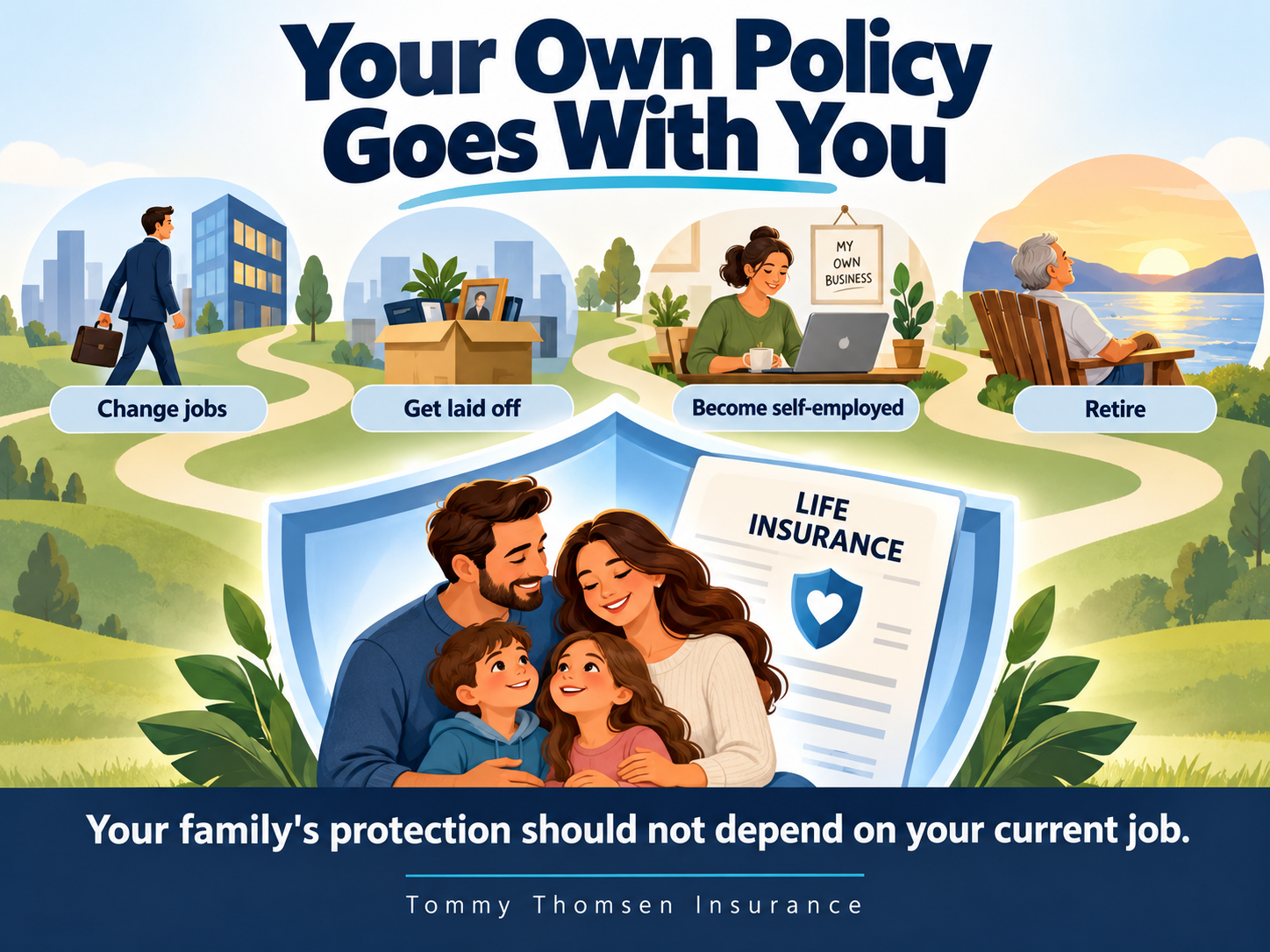
There is an important difference between applying for life insurance after your health changes and already having a policy in place.
Once a life insurance policy has been properly issued, a later change in your health generally does not allow the insurance company to simply cancel your policy because you became sick. The policy must still remain in force according to its terms, including required premium payments.
That can make owning coverage before a health change extremely valuable.
You are not trying to qualify for protection at the exact moment you suddenly realize how important it is.
“I’ll Buy It When I Really Need It”
That sounds reasonable until you think about what usually causes someone to suddenly feel like they really need life insurance.
It could be:
A health scare
A serious diagnosis
Having a child
Buying a home
Getting married
Becoming the primary income earner
Watching someone close to you pass away unexpectedly
Some of these events change only your financial needs.
Others can also change your ability to qualify for affordable coverage.
Life insurance works best when you plan ahead rather than react afterward.
Life Insurance Is About the People Who Depend on You
Instead of asking:
“Do I need life insurance today?”
Consider asking:
“If something happened to me today, who would be financially affected?”
Think about:
Your mortgage
Your spouse's income
Your children's needs
Childcare
Everyday bills
Outstanding debt
Future education expenses
Final expenses
How many years your family depends on your income
The Utah Insurance Department recommends considering income replacement, education, debts, final expenses, inflation, and other resources when determining how much life insurance a family may need.
The Best Time to Look at Life Insurance May Be Before You Think You Need It
None of us knows what our health will look like five, ten, or twenty years from now.
But you can make decisions based on what you know today.
If people depend on you financially, waiting simply means accepting the possibility that your age, health, or circumstances may be different when you finally decide to apply.
At Tommy Thomsen Insurance, we can help you look at your mortgage, income, family obligations, existing coverage, and long-term needs to determine what life insurance options may make sense.

Let’s Review Your Life Insurance
September is Life Insurance Awareness Month, and there may not be a better time to stop saying:
“I’ll do it later.”
Request a life insurance quote through our website or call Tommy Thomsen Insurance at 801-982-7200.
We will explain your options in plain language and help you look at coverage while you have the opportunity to plan ahead.
Your family’s need for protection may be in the future. The time to prepare for it is today.
This article provides general insurance information and is not financial, tax, medical, or legal advice. Life insurance eligibility, premiums, underwriting requirements, benefits, exclusions, and availability vary based on age, health, insurer, policy, and individual circumstances.