
Most people think of life insurance as something that only pays after you die.
But some types of life insurance can do more.
An Indexed Universal Life policy, commonly called an IUL, is permanent life insurance that combines a death benefit with the ability to build cash value over time.
That cash value can potentially become a financial resource you can access during your lifetime—which is one reason IUL policies deserve a closer look.
What Exactly Is an IUL?
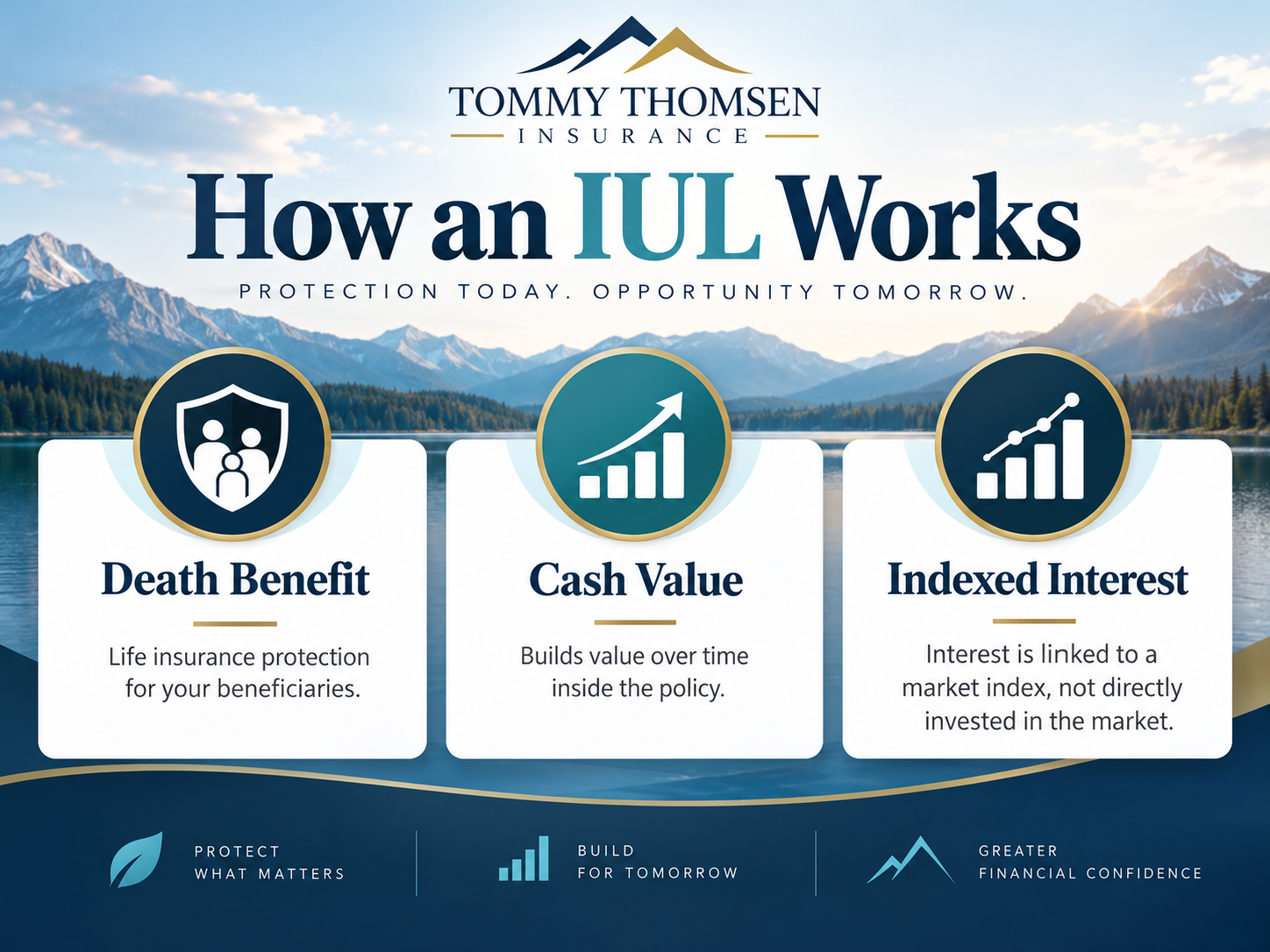
An IUL is a type of universal life insurance, meaning it is designed to provide permanent coverage rather than protection for only a set number of years.
Part of the premium pays for the cost of insurance and policy expenses. The other part can also accumulate cash value.
With an IUL, interest credited to certain cash-value accounts is linked to the performance of an outside market index, such as the S&P 500.
That distinction is important.
An IUL is life insurance first, not an index fund.
What Happens When the Market Goes Up—or Down?
Suppose your IUL has cash value allocated to an indexed crediting strategy.
If the index performs positively during the measurement period, the policy may credit interest based on that increase, subject to the policy's participation rate, cap, or other crediting rules.
If the index falls, many IUL strategies have a 0% floor on index-linked interest crediting, meaning a negative index return does not directly create a negative interest credit.
That does not mean the policy itself can never lose cash value. Insurance costs, policy charges, loans, withdrawals, and insufficient funding can still reduce the policy's value.
That is why understanding the actual policy illustration—not just hearing “market upside with no market downside”—is important.
One of the Biggest Benefits: Tax-Advantaged Growth and Access
This is where IULs often get people's attention.
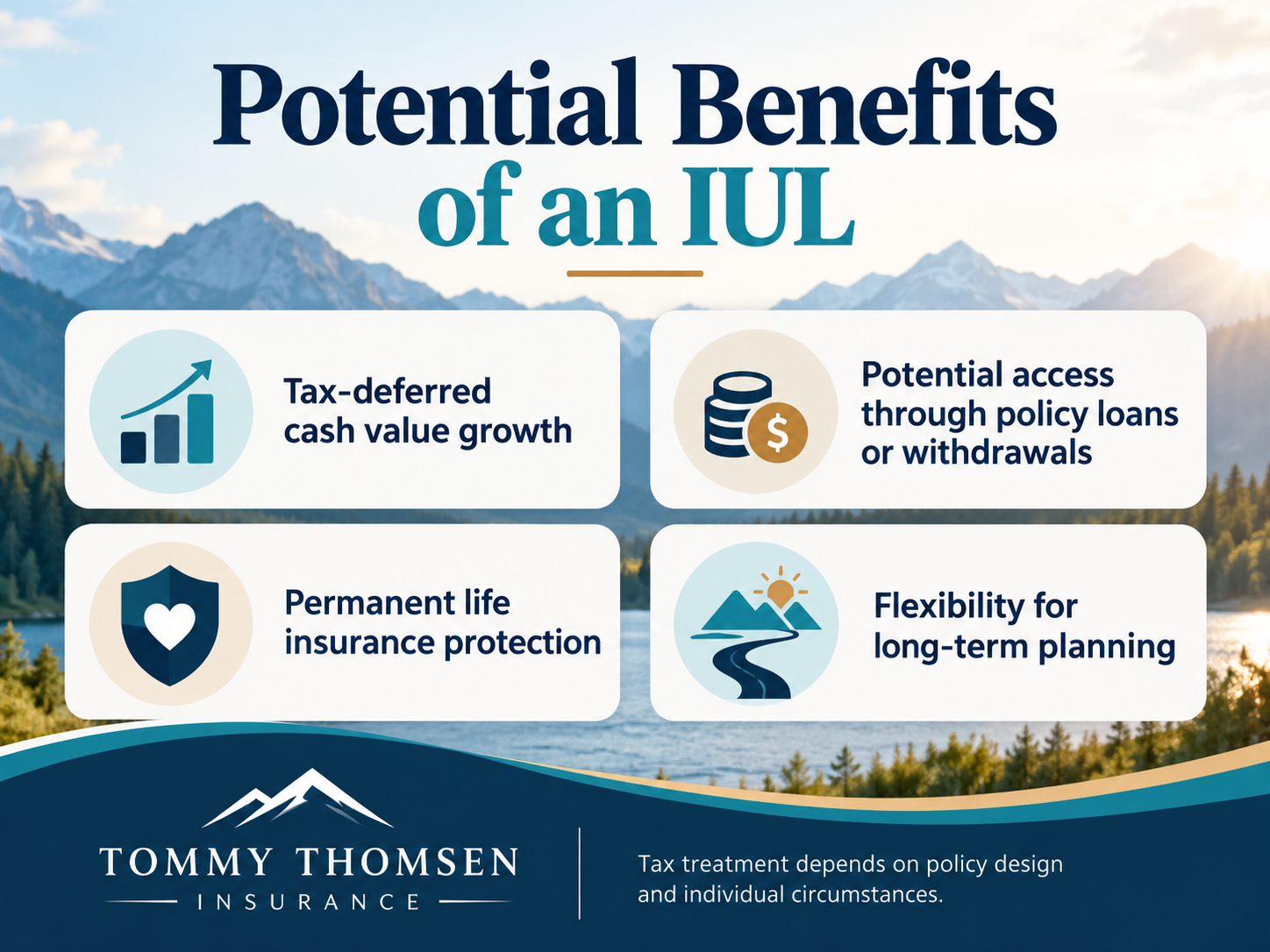
Cash value inside a permanent life insurance policy generally grows tax-deferred, meaning you are not receiving a tax bill each year simply because cash value increased. The NAIC describes universal life as permanent coverage with a cash account that earns interest without current taxation.
Policy owners may also be able to access cash value through withdrawals and policy loans.
When an IUL is properly designed and managed, these features can potentially provide access to accumulated value with favorable tax treatment.
But it is important not to oversimplify this as:
“All IUL gains are tax-free.”
Tax treatment depends on how the policy is structured, how money is accessed, whether the contract becomes a Modified Endowment Contract, and whether the policy stays in force. Loans can reduce the policy's cash value and death benefit.
If a policy is surrendered or lapses with taxable gain, taxes may be owed. The IRS states that when a life insurance policy is surrendered, proceeds above the owner's investment in the contract generally must be included in taxable income.
That is why an IUL should be designed with both the insurance need and the long-term funding strategy in mind.
The Death Benefit Has an Important Tax Advantage Too
The primary purpose of an IUL is still life insurance.
When the insured passes away, the policy pays a death benefit to the beneficiary as long as the coverage remains in force.
Life insurance death benefits paid because of the insured's death are generally excluded from the beneficiary's federal gross income, although exceptions can apply in certain situations.
So an IUL can potentially provide both:
Permanent life insurance protection for your family
Cash value that may become available during your lifetime
Those two purposes working together are what make the product interesting.
Starting an IUL When You Are Young
Time can be one of the biggest advantages an IUL has.
Imagine someone starts a policy at age 25 or 30.
They may have several decades for cash value to accumulate before retirement.
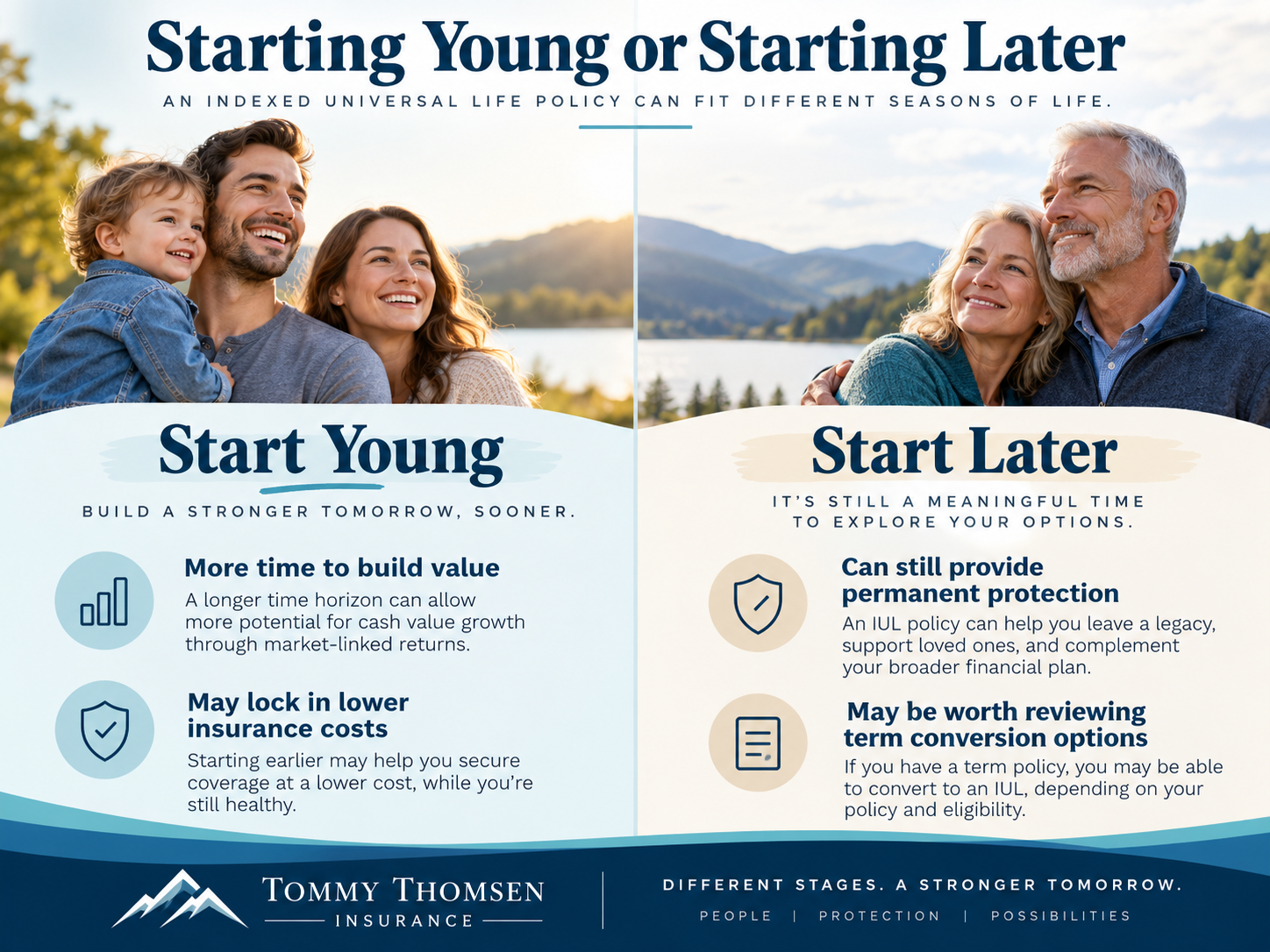
They are also applying for life insurance while younger, when insurance costs are generally lower than they would be for the same person starting at an older age, assuming similar health and underwriting circumstances.
Starting younger does not guarantee a particular cash value or return. IUL illustrations include nonguaranteed assumptions, and actual results can differ substantially from the illustrated values. Regulators recommend reviewing both guaranteed and nonguaranteed portions of life insurance illustrations.
But more time gives the policy more opportunity to build value.
That is one reason permanent life insurance can look very different when started early rather than waiting until later in life.
And it leads into a topic we will discuss in our next article: why some parents and grandparents consider permanent life insurance for children or grandchildren.
What If You Are Older? Is It Too Late?
Not necessarily.
Someone starting an IUL later in life has a different situation than someone starting at 25.
The cost of insurance will generally be higher, and there is less time for cash value to accumulate.
But an older applicant may have different goals as well.
They may be thinking about:
Leaving a permanent death benefit
Legacy planning
Providing money to children or grandchildren
Building an additional source of accessible cash value
Converting temporary coverage into permanent protection
Whether an IUL makes sense depends heavily on health, age, budget, insurance needs, funding level, and how long the policy is expected to remain in force.
There is no age where an IUL automatically becomes the right—or wrong—answer.
What If You Already Have Term Life Insurance?
This is an important conversation to have before your term policy expires.
Many term life policies include a conversion privilege that allows the policyholder to convert some or all of the term coverage into a permanent cash-value life insurance policy during a specified conversion period.
One major advantage is that conversion may be available even if your health has changed. The Utah Insurance Department notes that many term policies can be converted to cash-value insurance during the conversion period even when the insured is no longer in good health.
However, this does not mean every term policy can automatically be converted into an IUL.
The available permanent products, conversion deadline, amount that can be converted, and rules are determined by the original term policy and insurance company.
That is why someone approaching the end of a term policy should ask their agent:
“What conversion options do I have, and when do those options expire?”
Waiting until after the conversion period closes can eliminate choices that were previously available.
An IUL Needs to Be Funded and Reviewed Properly
Universal life policies provide flexibility, but flexibility also means the policy needs attention.
Insurance charges are deducted from the policy account. If premiums and credited interest are not sufficient to cover those charges, the cash value can decline and the policy can eventually lapse unless additional premiums are paid or other changes are made.
That is why an IUL should not simply be purchased and forgotten.
The policy should be reviewed periodically to see:
How the cash value is performing
Whether premiums are still appropriate
How the indexed strategies are crediting
Whether loans or withdrawals have affected the policy
Whether the death benefit still meets the family's needs
An illustration is a projection—not a promise.
Think Beyond Just the Death Benefit
Term life insurance can be an excellent way to purchase a large amount of protection for a specific period.
An IUL solves a different problem.
It combines permanent life insurance with the opportunity to accumulate cash value and access that value during your lifetime.
For a younger person, the advantage may be having decades for the policy to develop.
For someone older, the focus may be permanent protection, legacy planning, or converting existing term coverage while that option is still available.
The important part is designing the policy around what you actually want it to accomplish.
Let’s Talk About Whether an IUL Fits Your Goals

Indexed Universal Life insurance can be a powerful tool when it is properly designed, adequately funded, and understood.
But it is not a one-size-fits-all product.
At Tommy Thomsen Insurance, we can explain how an IUL works, review illustrations with you, look at any life insurance you already have, and help you determine whether permanent coverage fits your goals.
Call Tommy Thomsen Insurance at 801-982-7200 or request a life insurance review through our website.
And watch for our next article, where we will discuss why some parents and grandparents consider an Indexed Universal Life policy as a long-term gift for a child or grandchild.
This article provides general insurance information and is not tax, investment, financial, or legal advice. Indexed Universal Life policies include insurance costs, policy charges, and nonguaranteed elements. Crediting rates, caps, floors, participation rates, loans, withdrawals, premiums, death benefits, tax treatment, and policy performance vary by insurer and policy. Policy loans and withdrawals may reduce cash value and death benefits, and a policy lapse or surrender may create tax consequences. Consult a qualified tax professional regarding your individual tax circumstances.