Why Your Roof’s Age Can Affect Your Homeowners Insurance
Your roof may look fine from the driveway, but its age can have a major impact on your homeowners insurance.
As a roof gets older, insurance companies may view it as more likely to suffer damage from wind, hail, water, and other weather events. That can affect your premium, your coverage options, how a roof claim is paid, and even which insurance companies are willing to insure the home.
Imagine You Have an 18-Year-Old Roof
Suppose you bought your home several years ago and the roof is now 18 years old.
It has never caused a major problem, so you assume your homeowners insurance will replace it if a windstorm or hailstorm causes serious damage.
Then a storm hits.
The roof needs to be replaced, but you discover your policy covers the older roof at Actual Cash Value instead of Replacement Cost.
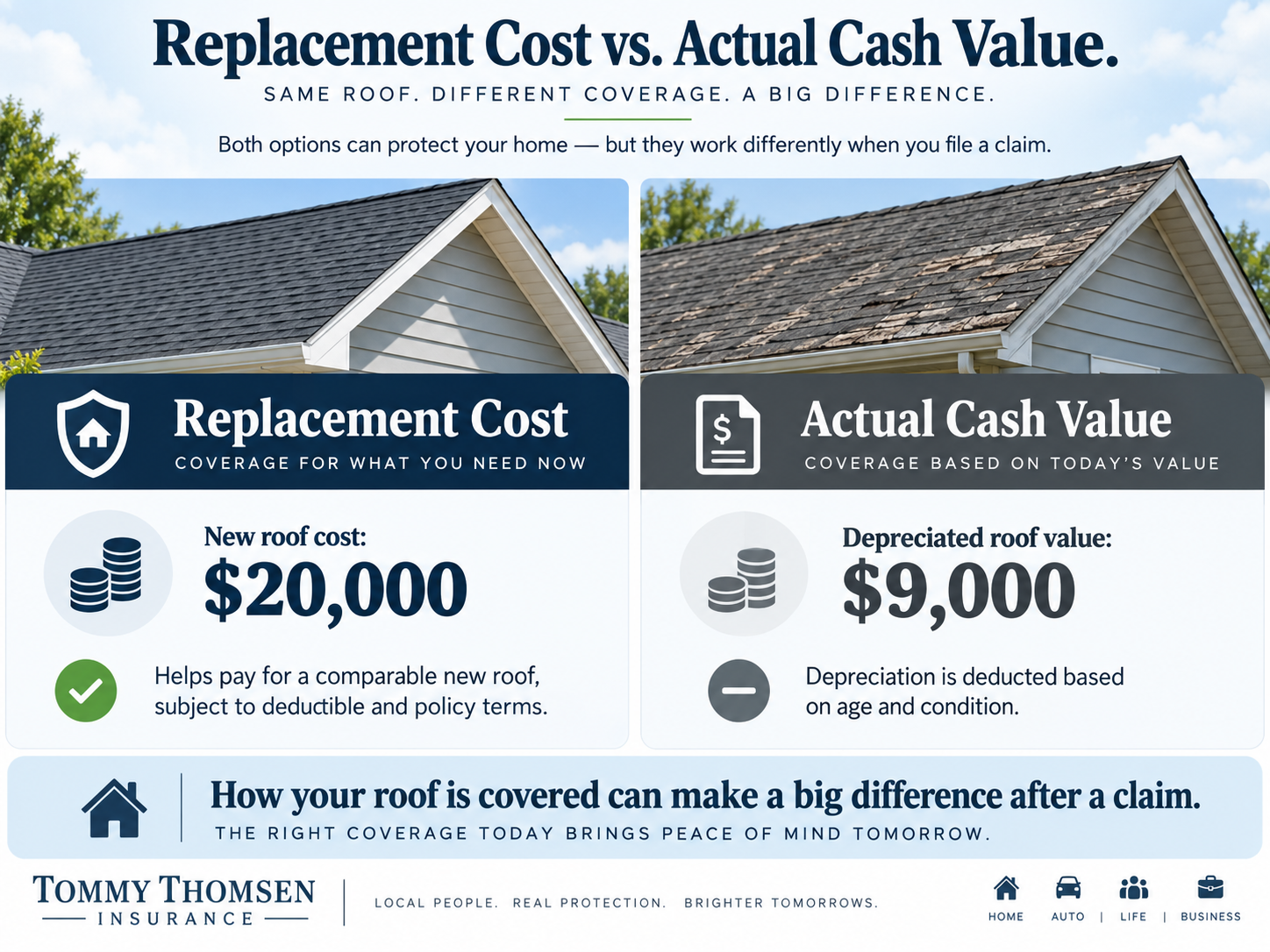
A new roof costs $20,000.
Because your old roof has depreciated with age, the insurance company determines its actual cash value is only $9,000.
Your deductible still applies, and suddenly you could be responsible for a significant portion of the replacement yourself.
That is why knowing the age of your roof—and how your policy covers it—matters before the storm happens.
Older Roofs Can Change Your Insurance Options
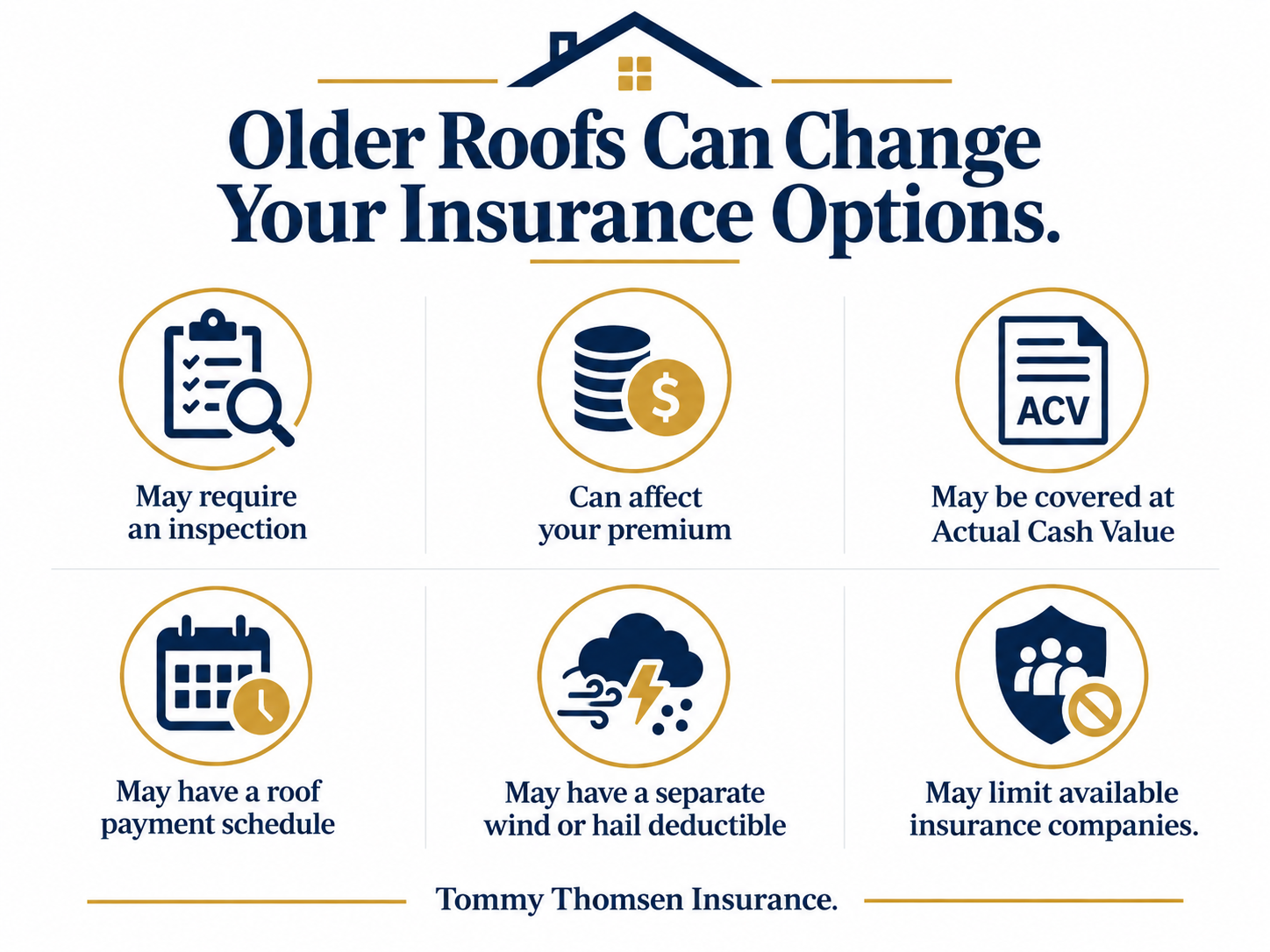
Insurance companies consider the age and condition of a roof because an aging roof generally has a greater chance of experiencing damage.
Depending on the insurance company, an older roof may:
Require an inspection
Affect your homeowners insurance premium
Be covered at Actual Cash Value instead of Replacement Cost
Have a special roof payment schedule
Have a different wind or hail deductible
Limit the companies willing to insure the home
There is no single roof age when all insurance companies make the same change. Each company has its own underwriting guidelines. The Utah Insurance Department also notes that a home's age and condition can affect homeowners insurance eligibility and premiums.
Replacement Cost vs. Actual Cash Value Matters
This is one of the most important things to understand about an aging roof.
Replacement Cost coverage may help pay the cost of repairing or replacing a covered damaged roof with comparable materials without permanently subtracting depreciation.
Actual Cash Value coverage takes depreciation into consideration. As the roof gets older, that can mean a substantially lower claim payment.
Two homeowners can both say:
“My roof is covered.”
But one may have Replacement Cost coverage while the other has Actual Cash Value coverage.
Those can produce very different results after the same storm.
Insurance Does Not Replace a Roof Just Because It Is Old
This is another important distinction.
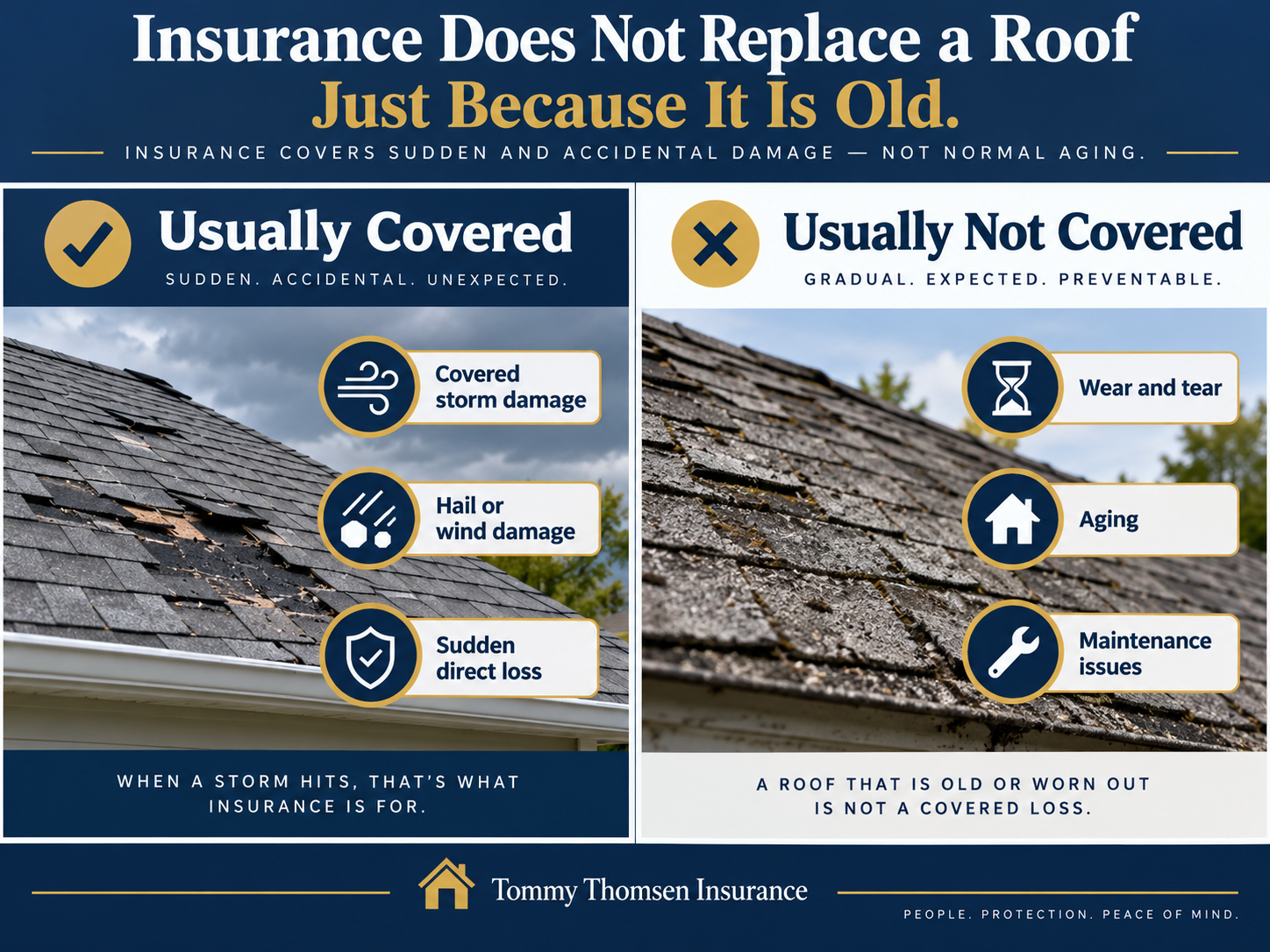
Homeowners insurance is designed to cover damage caused by covered events—not normal aging, wear and tear, or a roof that simply reaches the end of its useful life.
An old roof that needs replacement because it has worn out is generally a maintenance responsibility for the homeowner.
But the condition of that aging roof can still affect how an insurance company views the home and how a future covered roof claim may be settled.
Replacing Your Roof? Tell Your Insurance Agent
If you install a new roof, let your insurance agent know.
The roof's age and material may affect your insurance options, and your policy information should accurately reflect the home you have today. Some insurers may also consider newer or more durable roofing differently when determining eligibility or premium.
Keep documentation showing:
When the roof was replaced
The roofing contractor
The type of roofing material
Receipts and invoices
Any applicable warranties
Those records can be useful when updating or shopping your homeowners insurance.
Do You Know How Your Roof Is Covered?
Do not wait until after a hailstorm or windstorm to find out.
Ask your insurance agent:
How old does my insurance company consider my roof?
Is my roof covered at Replacement Cost or Actual Cash Value?
Is there a roof payment schedule?
Do I have a separate wind or hail deductible?
Would replacing my roof change my insurance options?
Your declarations page may not tell the entire story, so reviewing the policy with your agent can be worthwhile.
Let’s Review Your Home Insurance

Your roof is one of the most important parts of your home—and one of the first things an insurance company may consider when evaluating the property.
At Tommy Thomsen Insurance, we can review your homeowners policy, explain how your roof is currently covered, and help you understand whether its age is affecting your insurance options.
Request a homeowners insurance review through our website or call Tommy Thomsen Insurance at 801-982-7200.
We will explain your coverage in plain language so you know what to expect before the next storm arrives.
This article provides general insurance information and is not a guarantee of coverage. Roof eligibility, age requirements, inspections, deductibles, replacement cost, actual cash value, exclusions, premiums, and claim payments vary by insurer, policy, roof material, condition, and circumstances of the loss.